
Texas, Mississippi, Alabama, Georgia, and the Midwest Face Late-January Arctic Blast as Models Signal Dangerous Deep Freeze
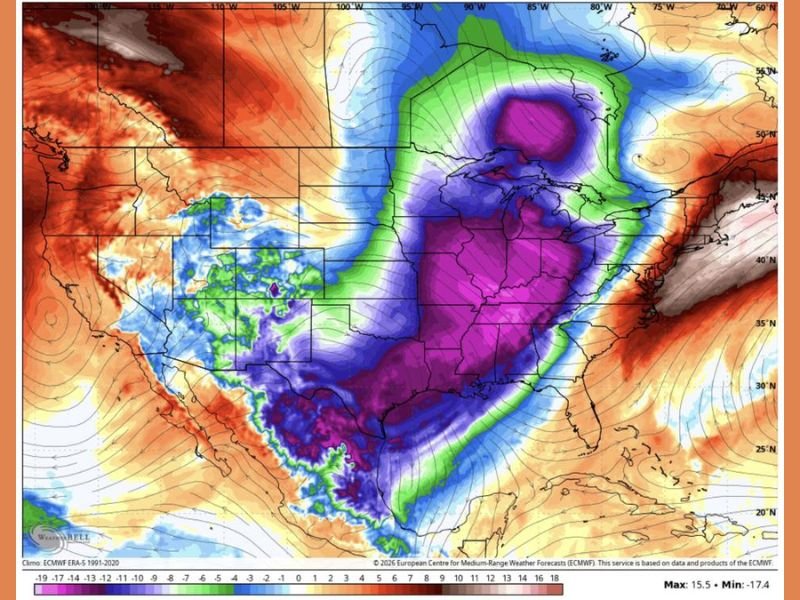
UNITED STATES – Weather models are flashing a serious warning for January 18–21, showing a powerful Arctic air mass diving deep into the central and eastern United States, bringing the kind of cold that doesn’t ease in quietly and doesn’t leave quickly. Forecasters describe this as a true winter outbreak, not a routine cold front, with temperature anomalies cold enough to raise infrastructure and safety concerns across multiple regions.
The latest long-range model runs show deep purple temperature anomalies, a signal meteorologists associate with extreme departures from normal. In plain terms, this means air so cold it would rank near the lowest levels typically seen in winter patterns.
Why Meteorologists Are Paying Close Attention
The data shows cold air plunging south aggressively, carving a large trough across the Midwest, Mississippi Valley, and into the Deep South. This isn’t a glancing blow. The core of the cold appears entrenched, suggesting several days of sustained low temperatures, rather than a brief overnight dip.
Model guidance indicates this surge follows a smaller front earlier in the month, but forecasters emphasize that earlier systems may simply be a preview. The Jan 18–21 window is when winter appears to fully assert itself, with little moderation once the cold settles in.
Regions Most Likely to Feel the Shock
The Midwest appears closest to the heart of the cold pool, with dangerously low temperatures possible across multiple states. From there, the cold air fans southward into Texas, Mississippi, Alabama, Georgia, and the lower Mississippi Valley, regions that often struggle most during extreme cold events.
Florida may avoid the coldest core, but models suggest temperatures low enough to cause widespread surprise, especially in areas unaccustomed to sustained winter conditions.
What Makes This Cold Different
This isn’t just about numbers on a thermometer. Prolonged Arctic air increases the risk of frozen pipes, power strain, transportation disruptions, and health dangers, particularly for those without adequate heating. The depth and breadth of the cold also raise concerns about overnight lows staying well below normal, preventing daytime recovery.
Meteorologists note that anomalies this extreme are rare outside of major winter outbreaks, and when they appear consistently across multiple model runs, they deserve attention.
What Happens Next
Long-range forecasts can still shift, but the signal strength is strong enough that forecasters are urging early awareness rather than waiting for last-minute confirmation. If the pattern holds, preparations across southern and central states may be necessary well before mid-January arrives.
Winter is far from finished, and this upcoming stretch may define the coldest chapter of the season so far.
Do you think this Arctic blast will verify as projected, or will winter pull back at the last minute? Share your thoughts and follow the conversation at FatCityFeed.com.


