Florida Pollen Levels Surge Across Central and Northern Regions, Triggering Allergy Alerts and Widespread Symptoms
FLORIDA – Pollen levels are climbing sharply across much of Florida, with central and northern parts of the state now seeing medium to high pollen concentrations, prompting allergy alerts and a wave of sniffles, sneezing, and itchy eyes for residents.
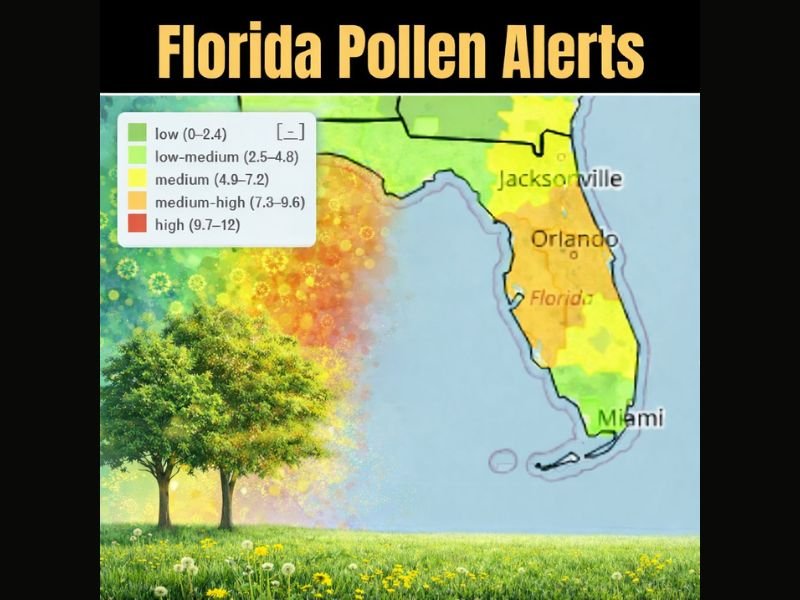
The latest pollen map shows large portions of the state shaded in yellow and orange, signaling moderate to medium-high pollen levels, particularly across central Florida. Higher numbers on the scale typically translate into more intense allergy symptoms, especially for people sensitive to tree and grass pollen.
Where Pollen Levels Are Highest Right Now
According to the map, central Florida — including the Orlando area — is firmly in the medium to medium-high range, while parts of northern Florida are also seeing elevated readings. Jacksonville and surrounding regions show moderate pollen levels, while pockets of southern Florida remain lower but are still trending upward.
The scale indicates:
- Low: 0–2.4
- Low-medium: 2.5–4.8
- Medium: 4.9–7.2
- Medium-high: 7.3–9.6
- High: 9.7–12
Several inland areas are approaching the upper end of the medium range, meaning symptoms can worsen quickly with just a small increase.
What This Means for Allergy Sufferers
For many Floridians, rising pollen means persistent sneezing, runny noses, itchy or watery eyes, and sinus pressure. Even people who don’t normally struggle with allergies may start noticing symptoms as pollen accumulates in the air and on outdoor surfaces.
Warm temperatures, sunshine, and breezy conditions are helping pollen spread more efficiently, allowing it to linger longer and travel farther. Trees and grasses are the primary contributors at this stage of the season.
Why Florida’s Pollen Season Hits Hard
Florida’s climate allows pollen-producing plants to thrive for longer periods compared to cooler states. Mild winters followed by early warmth often cause extended allergy seasons, especially in central and northern regions.
Urban areas can feel the effects more intensely due to reduced airflow between buildings, trapping pollen near ground level where people breathe.
What You Can Do Right Now
Experts recommend limiting outdoor activity during peak pollen hours, showering after being outside, and keeping windows closed during high-count days. For those with chronic allergies, this may be the time to stay consistent with medications.
With pollen levels still rising, relief may not come quickly, and conditions could worsen before improving.
Are allergies hitting you harder this week, or are you managing just fine? Share your experience and join the conversation at FatCityFeed.com.